
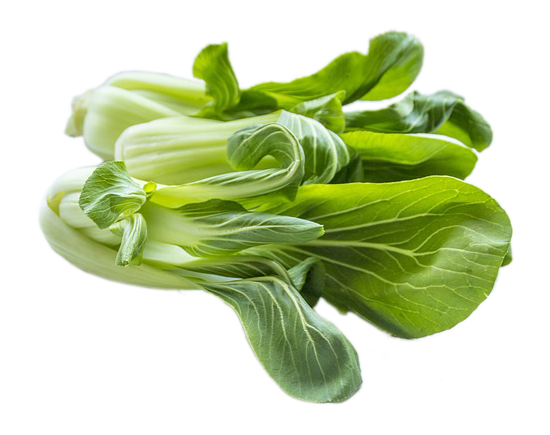
How to grow Pak Choi like a Pro
Pak Choi has slowly come to be a supermarket staple in the UK, and for good reason. Known in some places as ‘Chinese cabbage’ or ‘Bok Choi’, this lovely little brassica has a flavor somewhere between a mild cabbage and spinach. If harvested young you can eat it raw, and it makes a superb addition to fresh salads. When mature it’s an absolute must for stir fries and noodle soups, but it also is a fabulous companion to just about any fish you can think of, wrapped up together in foil with some lemon and seasonings – it’s divine.
As with all brassicas, Pak Choi is full of goodness. It is a best source of protein, dietary fiber, thiamin, phosphorus and niacin and a very very good source of vitamin C, vitamin A, Riboflavin, vitamin K, vitamin B6, calcium, folate, iron, potassium, magnesium and manganese.
As a garden vegetable they have great versatility – they can be harvested as a cut and-come-again crop or you can wait and harvest the whole thing as a mature plant. They are also great for container growing if you are low on space, because they are shallow rooting. When choosing your seeds, it’s good to remember that green-stemmed cultivars are generally tastier than white stemmed varieties, although both are still lovely.
WHERE TO START
You can start sowing your Pak Choi in April and carry on through July or August. In warmer parts of the country you can grow in partial shade, but as you move north you will need a full sun position.
You will want rich, moist soil that is firm, with plenty of well-rotted compost dug in. Sow your seed thinly, 2cm deep, in rows 30-38cm apart, depending on your variety. Within the row space your seed 15cm apart for small varieties, 20cm apart for medium size and 35cm apart for large.
GET GROWING!
Progressively thin seedlings to 9-10.5 cm for Pak Choi baby leaf, to 19cm for partially mature plants and to 26-31cm for fully mature plants. The thinnings of the plant are tasty, so throw them into a fresh salad rather than the compost bin.
Letting your Pak Choi dry out will lead to bolting and poor flavor, so water when needed to keep soil moist throughout the growing season. Because of their shallow roots they do better with little and often rather than an occasional drenching
If you have given them good soil then they shouldn’t need fertilizer, however it wouldn’t hurt to side dress crops with compost again around mid-season.
All the usual brassica pests can be a problem, so it’s a good idea to surround stems by the 8-10 cm mat with a split cut into it to avoid cabbage root fly from getting at the roots. Using fine net or fleece throughout the summer will keep other insects at bay, too.
HOW TO HARVEST
A CCA crop can be harvested at any stage from 4-13cm high. This may only take three weeks, and two or three further harvests should be possible during the season. A mature, headed crop takes around six weeks and can be lifted entirely or cut 2.5cm above ground level and left to re-sprout.
Pak Choi won’t last long in the fridge – usually a week at best. However it can be blanched and frozen for long term storage.
Expert tip:
- Pak Choi is best harvested in the morning when temperatures are low to prevent wilting of the leaves.
Amazing Facts
- Pak Choi has been known by its Chinese name since at least the fifth century, but seeds have been discovered by archaeologists that could be Pak Choi dating back 6000 years.
- One cup of cooked Pak Choi provides more than 100 per cent of the recommended dietary allowance (RDA) of vitamin A.
Popular Cultivars
- Pak Choi ‘Joi Choi’: Is slow to bolt and has good frost resistance.
- Pak Choi ‘Hanakan’ F1: Compact, slow bolting plants with round smooth leaves and thick pure white stalks.
- Pak Choi ‘Green’ F1: Produces vibrant apple green stems. Make earlier and later sowings of this variety under cloches for baby leaves